Introduction: An Awkward Time Point
In early 2025, when Claude Code was first released, the developer community reacted with excitement, saying, “Finally, a usable terminal AI!”
A year later, the situation has changed.
In May 2026, at the Code w/ Claude conference, Anthropic announced that API call volume had increased by 17 times year-on-year. This figure indicates that Claude Code is indeed useful, but it also highlights a problem: it has entered a “mature phase”—with complete features, a closed ecosystem, and high subscription barriers.
At almost the same time, OpenAI’s Codex completed its transformation from “the model behind Copilot” to an “independent agent platform.” It now includes CLI, IDE plugins, web applications, and a cloud task queue.
This article aims to discuss whether it is still necessary to learn Claude Code if you haven’t started yet, or whether new players in 2026 can skip Claude Code and start directly with Codex.
My judgment is: Yes, and you should.
Feature Comparison: Codex Has Caught Up and Even Surpassed in Some Areas
First, let’s dispel a stereotype: Codex is not just a “cloud completion tool,” and Claude Code is not exclusively for “local terminal use.” By April 2026, both tools had diversified their entry points:
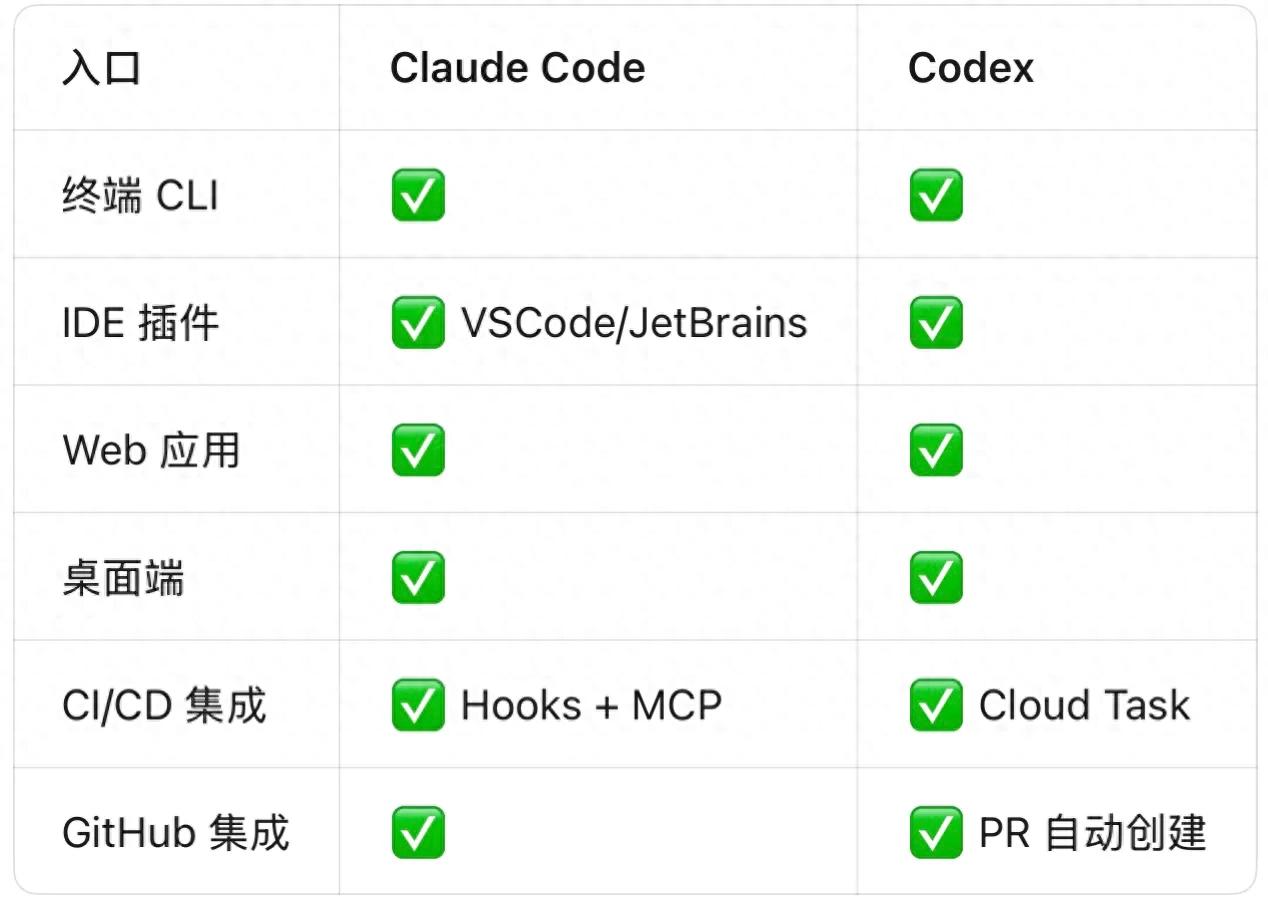
The real difference lies not in “whether” but in “how.” Claude Code’s core advantage is “live driving”—you interact with it in the terminal, adjusting direction based on immediate output, making it suitable for debugging, exploring unfamiliar codebases, and architectural discussions. Its Plan Mode breaks down large tasks into steps, requiring your confirmation at each step, making complex refactoring safer.
Codex’s core advantage is “delegated execution”—you clearly define tasks (with acceptance criteria, test commands, and repository rules), and it runs them autonomously, delivering a diff or PR for your review. Its Skills system allows you to define reusable workflows, and you can even use an AGENTS.md file to help the agent understand project specifications.
From the perspective of feature completeness, Codex now covers 90% of the scenarios that Claude Code does. The remaining 10% is the “real-time interaction finesse”—Claude Code indeed offers a better experience in probing, pausing, and adjusting plans, but this is more of a “nice-to-have” rather than a “must-have.”
For Domestic Users: Codex’s Friendliness Is Increasing
This is the most concerning part for domestic developers.
Claude Code’s domestic barriers:
-
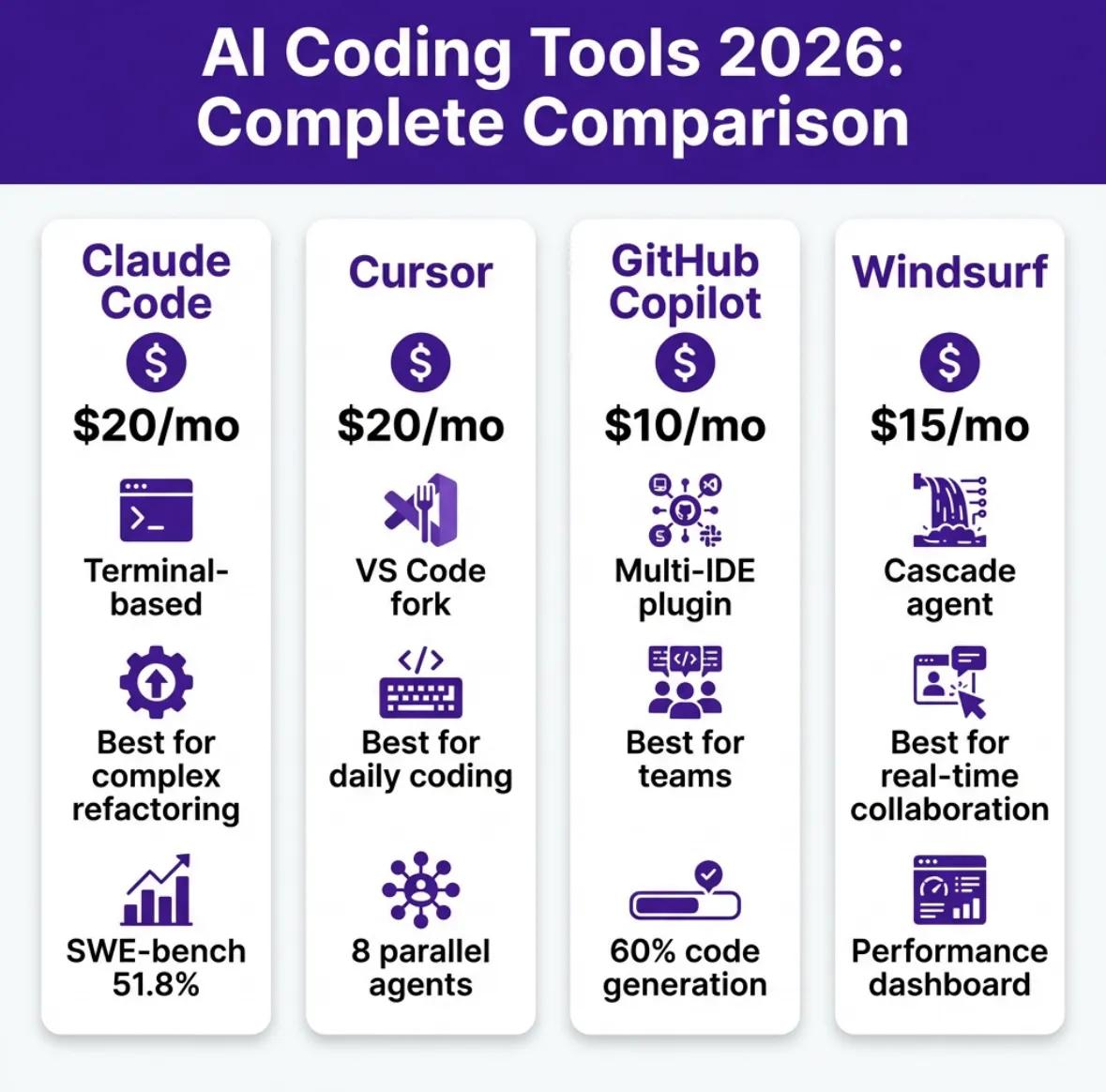
Subscription Risk Control: Anthropic has strict risk controls on domestic credit cards, leading to frequent account suspensions for Pro ($20/month) and Max ($200/month) subscriptions. There are even dedicated “subscription agency” services online.
-
API Quotas: Claude Code’s local operation relies on Anthropic’s API, which poses network issues for domestic calls, and the API billing is not friendly for heavy users.
-
Context Limitations: Although Claude is known for its 200K context, in practice, long codebases consume context very quickly.
Codex’s domestic friendliness:
-
Free Tier: Codex offers a free plan, which, although limited, is sufficient to experience core functionalities.
-
ChatGPT Subscription Reuse: If you already have ChatGPT Plus/Pro, Codex’s features are gradually integrated, eliminating the need for an additional subscription.
-
Cloud Task Advantages: Codex Cloud Tasks execute in a remote sandbox, independent of your local network environment, reducing the hassle of “local configuration” for domestic users.
More importantly, the ecological niche: OpenAI’s “gray availability” in China is higher than that of Anthropic. Many developers already have access to OpenAI API Keys, while Anthropic’s API is more closed to domestic users.
Token Consumption and Costs: Codex’s “Batch Mode” Is More Cost-Effective
This is a point many overlook: Claude Code and Codex have completely different billing logics.
Claude Code’s billing characteristics:
- Session-Based Billing: Each task is an independent session, quickly accumulating context. You could spend several cents worth of tokens just having it read through a codebase.
- Implicit Costs of Local Execution: Although it runs locally, each file read and code generation requires an API call. A complex refactoring task might cost $5-20 at once.
- Max Subscription Pitfalls: The $200/month Max plan offers 20 times the quota, but heavy users may still exceed it, with overage charged at API rates.
Codex’s billing characteristics:
- Task-Based Billing: Each task has a clear price, and you can see estimated consumption during cloud execution.
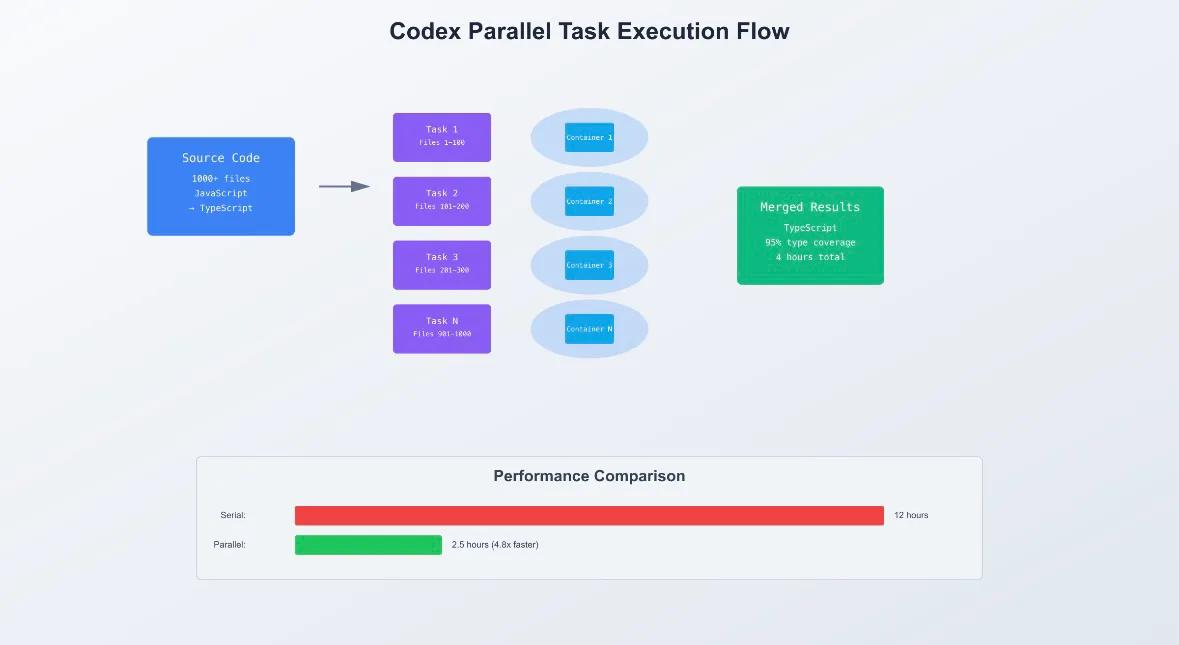
- Scale Effect of Parallel Tasks: Codex can run 30 tasks simultaneously, each in an independent sandbox. Although the total tokens might be high, the “human efficiency ratio” is significantly better—you can throw 5 tasks while attending a meeting and return to find 5 PRs waiting for you.
- ChatGPT Subscription Coverage: If you use ChatGPT Pro ($200/month), the usage quota for Codex is included, avoiding the dual payment of “subscription + API” required by Claude Code.
Simple Cost Calculation:
Assuming you are a moderately active developer using AI for programming 20 days a month, with 3-5 tasks each day:
- Claude Code Pro ($20) + API Overage ≈ $50-120/month
- Claude Code Max ($200) ≈ $200/month (possibly still insufficient)
- ChatGPT Pro ($200) includes Codex ≈ $200/month (no extra API anxiety)
- Codex Free Tier + Pay-As-You-Go Upgrade ≈ $0-50/month
For budget-sensitive domestic developers, Codex’s path is clearer.
Multi-Task Parallelism: Codex’s “Cloud Factory” vs. Claude Code’s “Dispatch Station”
In May 2026, Anthropic added a significant feature to Claude Code: Agent View (Dispatch Station).
This feature finally addresses Claude Code’s “single-threaded” pain point—previously, to handle 5 tasks simultaneously, you had to open 5 terminal windows and set up a grid with tmux. Now, you can manage all sessions in one interface, seeing the status of each task: in progress, waiting for your response, completed, or failed.
However, Claude Code’s parallelism is “local parallelism”—limited by your machine’s resources, and each task consumes your API quota. Having 20 parallel Specialist Agents sounds cool, but your laptop’s fan will start to scream.
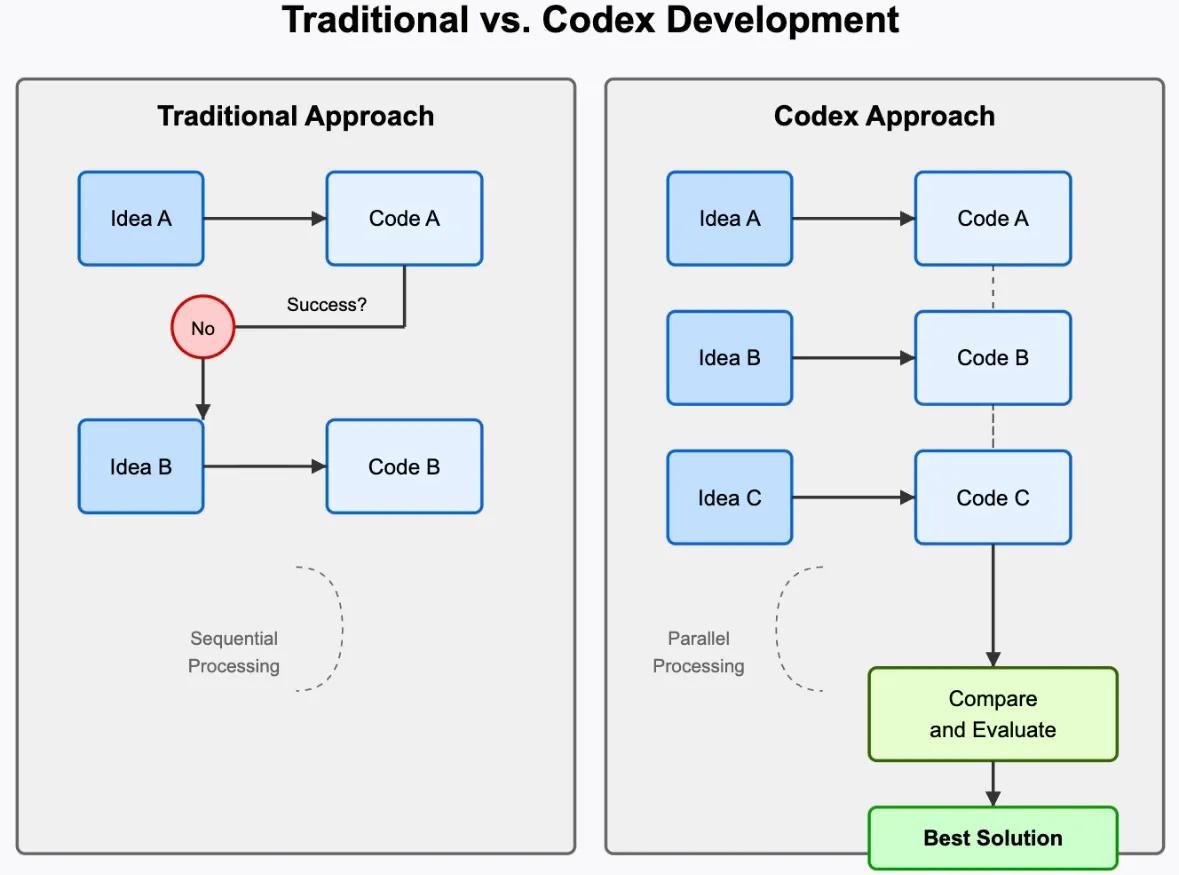
Codex’s parallelism is “cloud parallelism”—30 tasks run simultaneously on OpenAI’s servers, not consuming your CPU or electricity, allowing you to just collect results later. This “asynchronous batch processing” mode offers overwhelming advantages for microservice upgrades, batch refactoring, and multi-repository synchronization.
More critically, the workflow differences:
- Claude Code’s parallelism is “you are in charge”—you need to monitor the dispatch station, answer blocking questions, and switch contexts.
- Codex’s parallelism is “it is doing the work”—you submit tasks and can go grab coffee, returning to review the diffs.
For domestic developers who often have a rhythm of “meetings during the day and coding at night,” Codex’s “offline delivery” model is more friendly.
Scheduled Tasks and Automation: Codex Is More Suitable for “Unattended Operations”
Claude Code’s 2026 update introduced Dreaming (research preview)—after sessions end, the system periodically scans history to automatically refine Memory. This is more of a “passive automation,” allowing the AI to summarize experiences on its own.
However, for true scheduled tasks and unattended workflows, Codex is ahead:
- Cloud Tasks support scheduled triggers: You can set it to “scan the repository every morning at 9 AM, automatically fix lint errors caused by last night’s merge, and submit a PR.”
- Deep Integration with GitHub Actions: Codex can directly serve as an Action step, executing code reviews, test completions, and documentation updates within CI processes.
- Reusability of Skills: Define a “code review Skill” once, and reuse it across multiple repositories and time points. Claude Code’s automation relies on Hooks + MCP, which can also integrate with CI/CD, but it is “terminal-native”—better suited for environments already equipped with command-line setups.
If your team uses GitLab CI, Jenkins, or requires scheduled triggers, Codex’s cloud route is smoother.
Other Aspects
1. Code Quality and Model Differences
Claude Code is based on Claude Sonnet 4.6 / Opus 4.6, performing excellently in SWE-bench (real GitHub Issue resolution capability tests), especially adept at complex architectural reasoning.
Codex is based on GPT-5 / GPT-4.1, with a coding style leaning towards “OpenAI flavor”—standardized, conservative, and comprehensive in test coverage. In practical experience, Codex’s changes are more “cautious,” applying more scrutiny before each submission, resulting in slower speeds but controllable error rates.
For beginners, Codex’s conservativeness is an advantage; for veterans, Claude Code’s aggressiveness is the fun part.
2. Security and Compliance
Claude Code stores data locally, making it suitable for handling sensitive code. Codex’s Cloud Tasks execute in a remote sandbox; although OpenAI promises not to store code, “code leaving the country” is a red line for some enterprises.
The practical choices for domestic enterprises: If code cannot leave the country, running Claude Code locally is a necessity; if cloud sandboxing is acceptable (for example, for open-source projects or non-core code), Codex is more cost-effective.
3. The Paradox of Learning Curves
Claude Code’s “terminal interaction” requires learning a set of command syntax, the confirmation process of Plan Mode, and the configuration of Hooks. Codex’s “task list” mode is closer to human collaboration—writing a requirement document is akin to giving Codex instructions.
For new users in 2026, Codex’s onboarding cost is actually lower.
Conclusion: Choosing Tools Is Actually Choosing Workflows
Returning to the title question: Should you learn Claude Code? If not, there’s no need to learn it.
This statement is not meant to belittle Claude Code—it remains one of the most powerful terminal AIs in 2026, especially excelling in complex refactoring, real-time debugging, and in-depth code reviews.
However, learning a tool incurs a time cost. If you haven’t started yet, you face a mature ecosystem with high subscription barriers and insufficient friendliness for domestic users. In contrast, Codex, as a rapidly iterating, free-to-try, and more open platform for domestic users, offers new players a “latecomer advantage”—you can stand on its shoulders and skip the exploratory phase of Claude Code.
Comments
Discussion is powered by Giscus (GitHub Discussions). Add
repo,repoID,category, andcategoryIDunder[params.comments.giscus]inhugo.tomlusing the values from the Giscus setup tool.