Introduction
On May 11, at the ClawCon event organized by muShanghai, core members of the OpenClaw community gathered in a conference room at Alibaba Center to engage with developers, entrepreneurs, and users from across the country.
We had the opportunity for exclusive interviews with Josh, a core maintainer of OpenClaw, and Vincent Koc, a key code contributor from the OpenClaw Foundation.
Josh is one of the earliest contributors to OpenClaw. In November 2025, when few knew about the project, he submitted Pull Requests 39 and 40—now the number has exceeded 80,000. He is not an employee of OpenClaw and does not receive a salary, as he works at a large tech company.
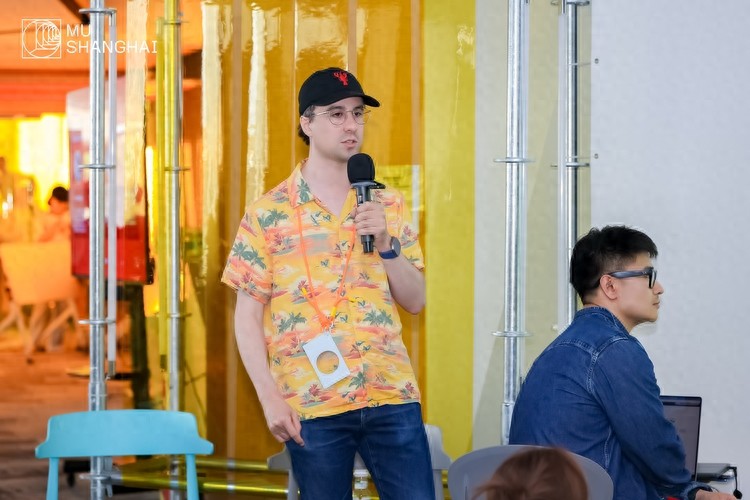
He was part of the early Discord community team, contributing to its establishment and expansion, and was the first to focus on Chinese users by translating documentation into Chinese, integrating Feishu, and creating a real-time Chinese-English translation bot on Discord. His explanation is simple: “I encountered the right idea at the right time.”
Vincent is the second-largest global code contributor to OpenClaw and leads the platform’s technical direction.
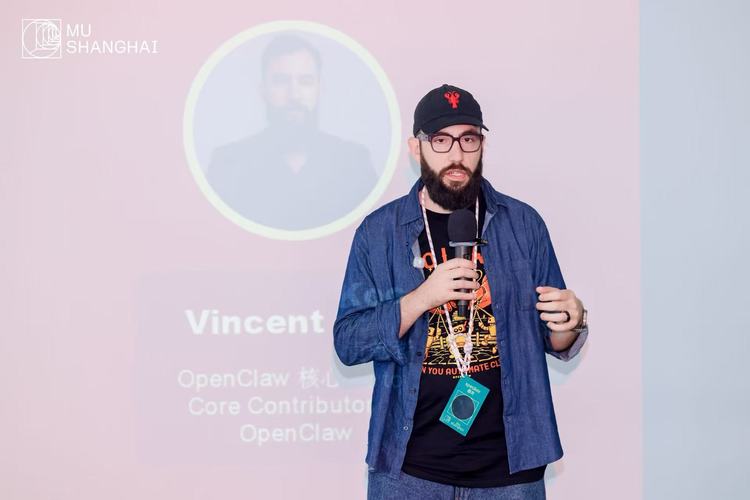
We discussed the real issues troubling users over the past six months: Will the CLI interaction change? Who is responsible for security? How can token billing be controlled? What are OpenClaw’s plans in China?
1. Who was OpenClaw originally designed for? What will you do for non-technical users? Will there be other interaction methods besides CLI?
Josh: In the early stages, this project was just to allow people to run programming agents (Claude) on their phones and control some operations on their computers (like playing music, smart home automation, etc.) through large language models on mobile.
Seeing so many non-technical users come in is truly amazing. It’s incredible to introduce AI to so many people for the first time.
I believe AI should work in any way you want—terminal, mobile messages, at home—wherever it’s convenient. That is the best way to interact with AI.
However, this makes it very challenging. We are supporting an ecosystem that covers almost everyone, so we cannot optimize for a specific user group. I cannot give you a clear answer on where we will go beyond CLI at this point.
2. For ordinary users without coding backgrounds, security is a blind spot. What are OpenClaw’s plans for safety?
Vincent: This is indeed a serious issue. We have done a lot of work on security in recent months—ensuring that OpenClaw is safe during startup and operation, including sandboxing and other specific measures.
At the same time, we are collaborating with some tech companies and model companies that provide solutions with built-in correct security configurations, so ordinary users do not need to worry about these issues.
Because the code is open-source, anyone can see how it works. We have received significant contributions from the global community, and everyone helps us improve security. Open-source itself is a form of security assurance.
This is one of the true advantages of the open-source model—vulnerabilities are hard to hide because everyone is watching.
Follow-up: Which team is primarily responsible for security work? Vincent: Security is a shared responsibility among the entire community and maintainers.
3. OpenClaw’s billing is essentially uncontrollable for users. Will there be engineering optimizations to help users achieve more with fewer tokens?
Josh: I see this as a temporary issue. To be honest, my strategy is a bit “privileged”—I try to spend as much as possible on tokens to get the results I want, betting that the token costs will decrease.
The amount of tokens I consume is quite staggering: in the tens of billions, and most of it is not OpenClaw, but for coding. I click a button, and tokens disappear, my quota drops, and then I have to switch to another account, constantly logging in and out, which is a terrible experience.
If OpenAI people are watching, please create a native account switcher so I can pay you more!
Regarding long-term trends, I have a background in physics, so my judgment is that as countries like China invest heavily in renewable energy, computing costs will continue to decline, and token prices will follow suit. Just as more steel in the 18th century allowed for more production, the same principle applies today.
I try to spend as much as possible on tokens to get the results I want, betting that token costs will decrease. This is my personal view, and for those currently spending money, it is clearly not a great answer.
However, he also has a practical suggestion for all users: the way you write prompts directly determines how many tokens you spend.
When I’m tired, I often write: ‘Can you fix this? I just want it to run, I don’t care about anything else.’ In my experience, this usually results in poor outcomes—expensive and useless. But if I carefully organize the prompts and provide context, the results are much better, and consumption is more controllable. It’s not as fun, and the workload is much larger, but it’s worth it.
Vincent: From an engineering perspective, we have focused a lot on precision and accuracy in recent months, which to some extent comes at the cost of token consumption—using a lot of tokens in certain scenarios is unavoidable. But we are also continuously pushing to ensure that agents do not waste time on the same issue repeatedly.
We also see model companies (including those in China) significantly improving model efficiency, and subscription plans are emerging to help users control overall costs. This field will continue to improve, and we are confident about it.
4. Application companies have done a lot of engineering work, but every model update overrides it. How do you view the boundary between applications and models? How does OpenClaw respond?
Vincent: From the beginning, we designed OpenClaw as a core system that supports almost all mainstream models. We do not optimize for any specific model—we collaborate with the entire ecosystem, allowing model companies to decide how their models can perform best with us, and they can contribute code directly. This is the best approach we believe.
We will not bind to any specific model. We work with the ecosystem, which is the best way.
But I also admit there is a specific challenge we are still researching: if you have a skill that works well on one model, it may not work on another—how can that information remain useful when switching models? There is no simple answer to this question.
However, this project has only existed for a few months, and it is still very early. But we will continue to see improvements in this area, and I am confident about it.
5. The technical trend is shifting from general agents to proactive agents, but the economic calculations still don’t add up. What do you think the next generation of agents will evolve into? If you had to define it in one word?
Vincent: This is a challenging question. Honestly, I cannot control what model companies are doing. What I can say is that we will do our best to ensure OpenClaw operates in the best way. But that itself is a challenge—we have too many different model options, and making it perfect for everyone is impossible. I can make a change to OpenClaw that works great for one person but results in a poor experience for another. This is inherently a challenge in definition.
What is the next generation of agents? If I had to define the next generation of agents in one word—my answer is: Self-evolving.
I believe we are already using it. If you think of OpenClaw as a scaffolding application: you look at a problem, discover an issue, and it can create code and modify itself. To me, that is the definition of self-evolution. It’s not in the future tense; it’s in the present tense.
6. If China’s energy costs continue to decline, assuming tokens approach being free, will China’s agent ecosystem take a completely different path?
Josh: In the U.S., OpenClaw feels very consumer-oriented; most people use it to create personal bots to manage their lives and affairs; companies building products around OpenClaw are selling it to individual users. In China, many large companies run their businesses directly on OpenClaw. This is not commonly seen elsewhere.
China is very fast, very fast, very fast. If a feature is missing, Chinese users will hack it together the same day. This pace of development is truly eye-opening. In Europe, such things would absolutely not happen.
Another thing that impressed me is that the Shenzhen government is helping citizens deploy OpenClaw, with elderly and young people lining up outside neighborhoods to have people with laptops help them install it.
The audience interested in it in China is very diverse, more like ordinary people, representing a broad social cross-section. Silicon Valley is a specific type of crowd: working in startups or tech, which is just a small part of society.
My brother lives in Toledo, Ohio, and I don’t think you can find many OpenClaw users there. But in China, I think you could go to many different places and encounter people you wouldn’t expect to be using OpenClaw.
7. What is your next step in China? Do you plan to cooperate with the open-source community, cloud companies, or enterprises? Are there specific plans?
Josh: I cannot tell you anything specific—I cannot say which company we are talking to next. Why? Because it’s not something I can decide, nor is it something I can control right now. I am not an official representative; I do not come from the foundation, and I am not speaking on their behalf.
But there are a few things I can say. First, we have noticed a very practical issue in China: many large companies take the latest version one day and then run that version indefinitely. Once a hard fork is made, subsequent updates become very difficult. One of our important purposes in coming here is to communicate with them, understand these issues, and improve our processes.
We hope to provide everyone with a long-term LTS version, which is stable enough for them to build on for a long time, rather than having interface protocols change constantly.
Second, we have noticed that Chinese users are very dispersed—there are many WeChat groups, but no centralized place. We hope to find a centralized location to communicate with the entire community in one place, making it much easier to improve the product.
Third, regarding larger organizational aspects: the OpenClaw Foundation was just established about two weeks ago, is hiring, and is connecting with companies and labs to try to formalize these processes.
I am not very clear about what is happening over there; Vincent knows more. But the dialogue is ongoing, which benefits everyone. I hope everyone can have an equally high-quality experience and build interesting products on it.
8. When Discord first opened, it was chaotic with 100,000 users flooding in. What did you learn from that experience? What advice would you give to someone wanting to create an open-source community now?
Josh: When I joined OpenClaw, the PR numbers were 39 and 40—that was very early. Now the project has about 80,000 PRs. I am not an OpenClaw employee and do not get paid; I am here simply because I think it’s cool.
Around January 1, Peter invited me to join, and I became a maintainer and Discord admin. It was complete chaos—about 100,000 people flooded in within a month.
It was not intentional. We didn’t say, ‘Come on, we’re going to do something big’—it just happened, and we were completely stunned ourselves. When the first thousand people came in, I thought it was crazy; then ten thousand, then twenty thousand… You watch that number, and you still can’t believe it.
Regarding advice, the core judgment is: 95% of people online are well-intentioned, but there will always be some troublemakers. So you must act—clearly state the community’s purpose, be transparent and open, connect the right people at the right time, and think through the real needs of the community and the project.
The entire project is nothing without the community. You may have amazing technology, but ultimately, it’s about the people.
Now, we are already using OpenClaw to maintain OpenClaw itself.
Comments
Discussion is powered by Giscus (GitHub Discussions). Add
repo,repoID,category, andcategoryIDunder[params.comments.giscus]inhugo.tomlusing the values from the Giscus setup tool.